
Case Study
Designing a Scalable Promotion System for a Retail Chain POS
Overview
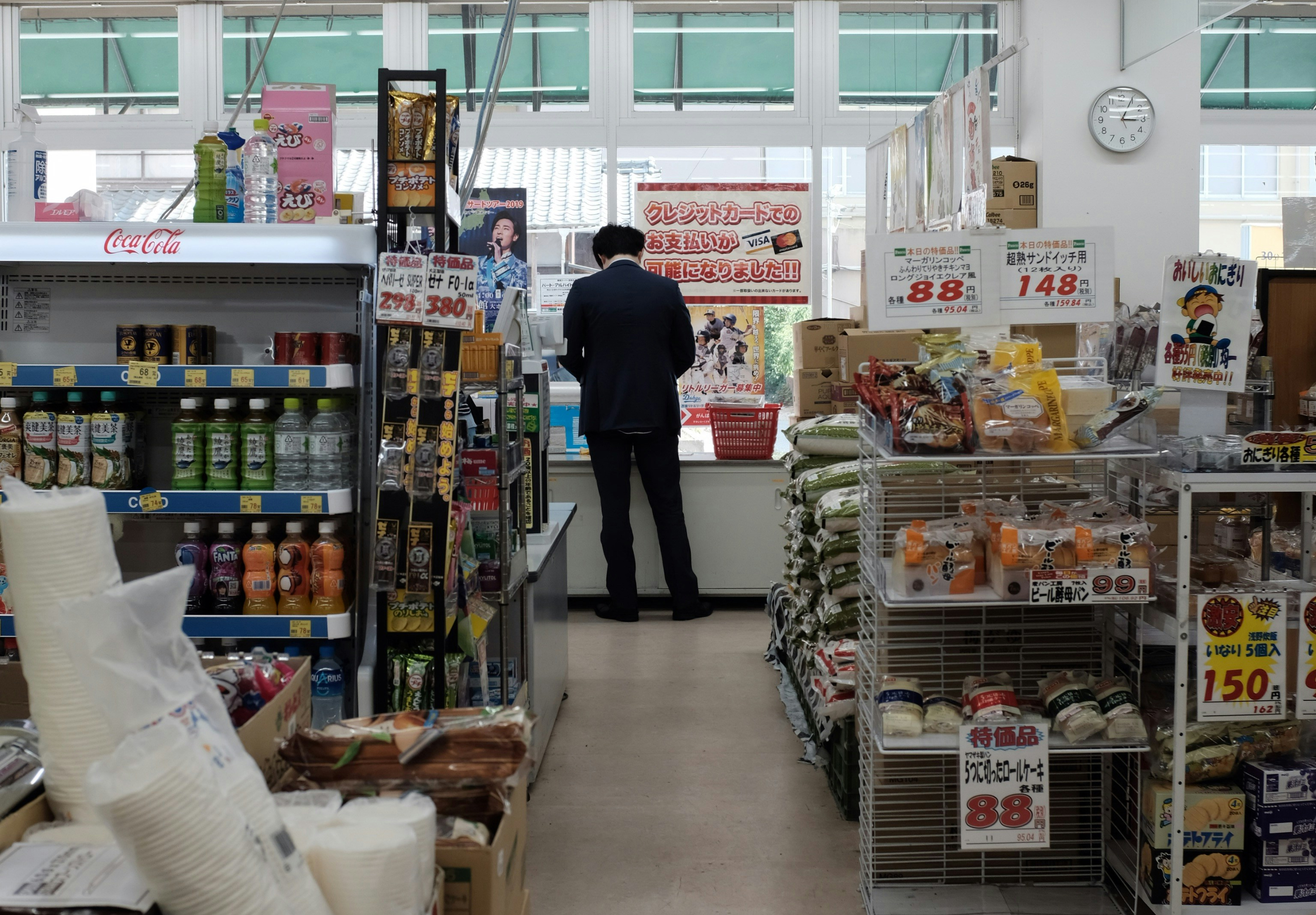
While working on the POS platform for a retail chain, I was responsible for redesigning the promotion setup experience used by store managers and marketing teams.
The system supported nine promotion types, including product discounts, bundles, cross-product promotions, and location-based campaigns. Promotions could also be limited to specific stores within the chain, which made configuration more complex.
The existing setup flow relied on system-oriented terminology and fragmented steps, making it hard for non-technical users to configure promotions correctly. My goal was to design a clear, scalable, and intuitive setup system that allowed managers to configure complex promotions confidently.
The Problem
Through discussions with the product team and internal stakeholders, I identified three key issues:
1. Technical language created confusion
The system used internal terms such as "Discount for other products", "Cross-product promotion", and "Conditional item discount". These reflected backend logic, but did not match how retail teams talk about campaigns, so managers often could not predict actual promotion behavior.
2. Complex promotion conditions
Promotions could include multiple parameters: campaign period, trigger products, reward products, discount types, and store locations. With nine promotion types, the setup flow quickly became overwhelming for many users.
3. Store-specific campaigns were easy to misconfigure
Many campaigns only applied to selected stores, but location scope appeared as a secondary step in the old UI. This made store targeting easy to miss and increased configuration mistakes.
Key Insight
During research and internal discussions, I found a consistent pattern: store managers usually describe promotions in natural sentences.
"From June 1 to June 7, at Store A and Store B, when customers buy products from this list, they will receive a discount on another list of products."
The system forced users to translate this natural language into technical configuration concepts. That language mismatch was the core usability problem.
Solution
1. Natural language promotion descriptions
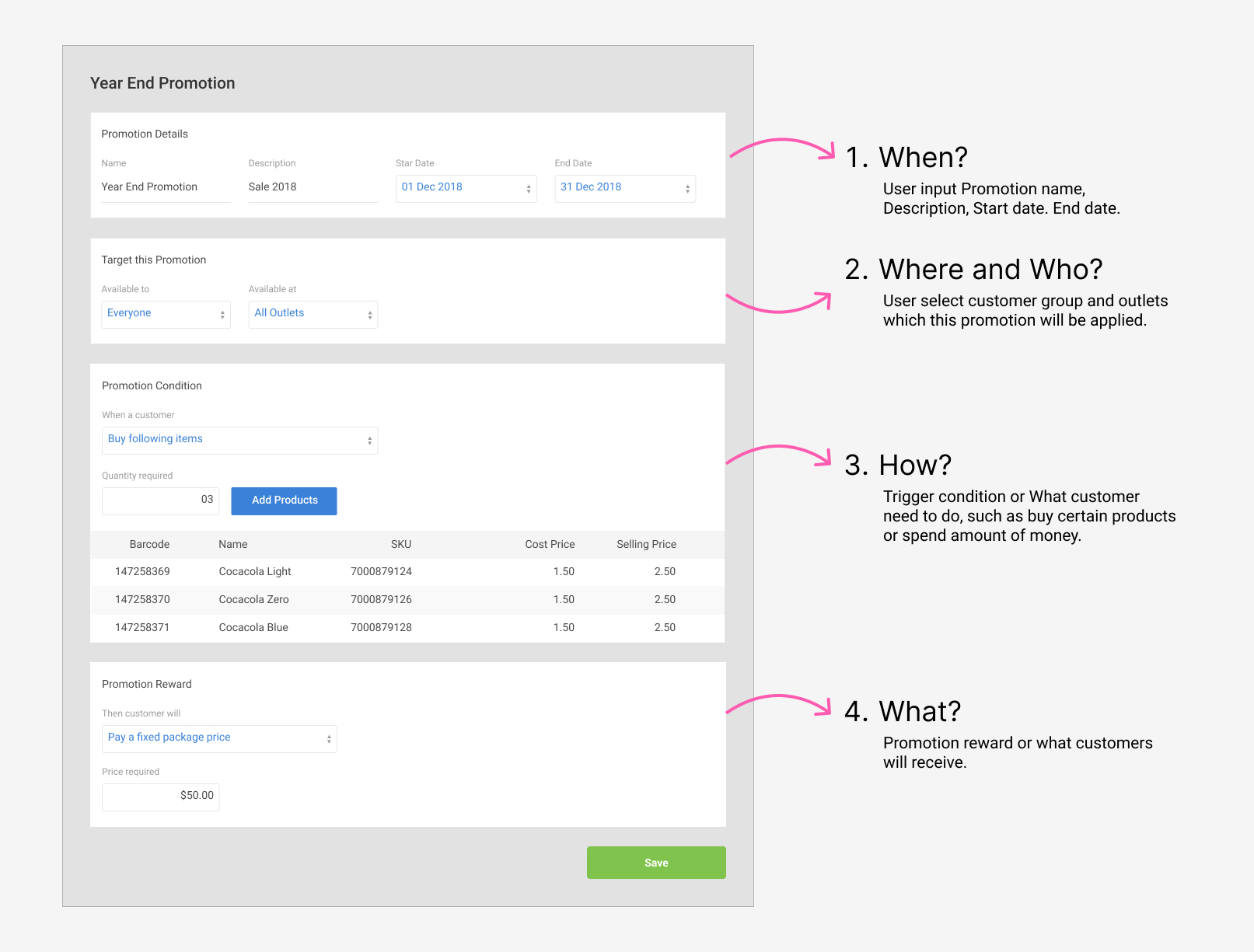
Instead of exposing technical labels, the new flow generates human-readable promotion summaries that mirror real communication. Managers can immediately verify logic without translating internal system terms.
2. Modular promotion structure
I redesigned promotion setup around shared building blocks: Campaign period, Store scope, Trigger products, Reward products, and Discount rule. This supports all promotion types with one mental model and reduces training overhead.
3. Store-based promotion control as a first-class element
Store selection was elevated to a core part of the promotion definition. Users can clearly see where promotions run, which stores are included, and how campaigns differ by location.
Outcome
The redesigned promotion system significantly improved usability for merchants.
Operational improvements
- Faster promotion setup.
- Fewer configuration mistakes.
- Easier onboarding for new stores.
- Reduced support and training effort.
Product impact
- The structured promotion framework also made the system more scalable as new promotion types were introduced.
- The redesigned promotion system helped demonstrate that the product could support real retail operations.
Business impact
- During discussions with Angel Supermart, the ability to configure complex promotions across multiple outlets was one of the key evaluation criteria.
- While the final decision involved multiple factors, the promotion capability contributed to successfully closing the deal with the client.
- Promotion flexibility became an important capability when selling the POS system to larger retail chains.
Key Takeaways
Strong promotion UX is not only about rule power. It is about helping non-technical teams understand, verify, and communicate campaign behavior with confidence.